Perfect Guide to Caulking Kitchen Countertop Like a Pro
Caulking your kitchen countertop may seem like a little task, it is an essential step to keep everything tidy, mold-free, and looking great. Caulking your kitchen countertop seals the gaps between the countertop and your wall or backsplash, preventing dirt, food, and moisture from getting to that area. Over time, these gaps will eventually collect food, moisture, bacteria, and mold, which may cause damage to your kitchen surfaces.
With the right products and professional techniques, you will help keep your kitchen clean and durable. In this article, Caulking Service New Jersey will explain everything you need to know about how to caulk your kitchen countertop expertly.
Why Caulking Your Kitchen Countertop Matters
Kitchen upkeep does not include caulking the kitchen countertop. Although a simple task, caulking the countertop is an important step that might save you costly repairs later on. Caulk is a flexible barrier that fills the space between two surfaces, which is usually the gap between the countertop and the backsplash, or the gap between the countertop and the sink.
If there is no suitable caulking, water may leak behind cabinets or backsplash, leading to rot, discoloration, and/or mildew. Additionally, caulking can maintain the aesthetic value of your kitchen by providing a clean, smooth transition between different materials. The professionals use silicone or latex caulks that are of premium quality for durability, flexibility, and resistance to mildew.
Choosing the Right Caulk for Kitchen Countertops
Choosing the correct caulk type is of utmost importance in getting a professional finish. In case of kitchen countertop caulking, silicone caulk is usually the recommended option as its main advantages are top most water resistance and flexibility. It sticks strongly to almost all kinds of surfaces, such as granite, marble, quartz, and tile. If, on the other hand, you want to paint the caulk, it would be better to go for paintable latex or acrylic caulk. Always pick the caulk that has a label “kitchen and bath” because they usually possesses the properties of resisting mold and mildew. At Caulking Service New Jersey, we use premium-quality, mold-resistant silicone sealants to provide long-lasting results that can endure moisture and daily use in the kitchen.
Step-by-Step Process of Caulking Kitchen Countertop
1. Prepare the Surface
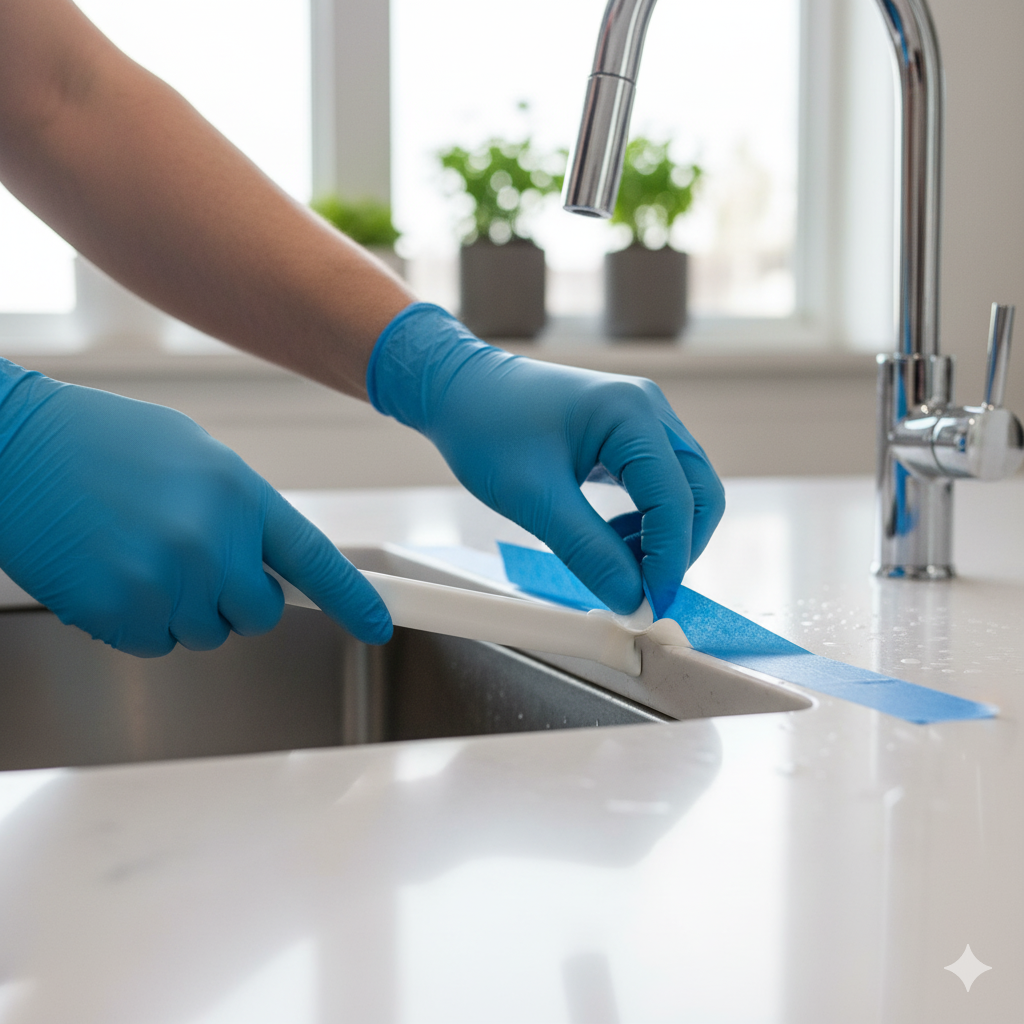
Before caulk application, the concerned area must be cleaned thoroughly. Old, cracked, or discolored caulk should be taken out using a caulk remover or a utility knife. Wiping with rubbing alcohol or a mild detergent can remove grease, dirt, and debris. Adhesion will be better with a clean and dry surface.
2. Choose the Right Caulk Gun
The proper caulk gun makes the application smoother and more accurate. Cut the nozzle of the caulk tube at a 45-degree angle and make sure the hole is slightly smaller than the gap you are sealing.
3. Apply the Caulk Smoothly
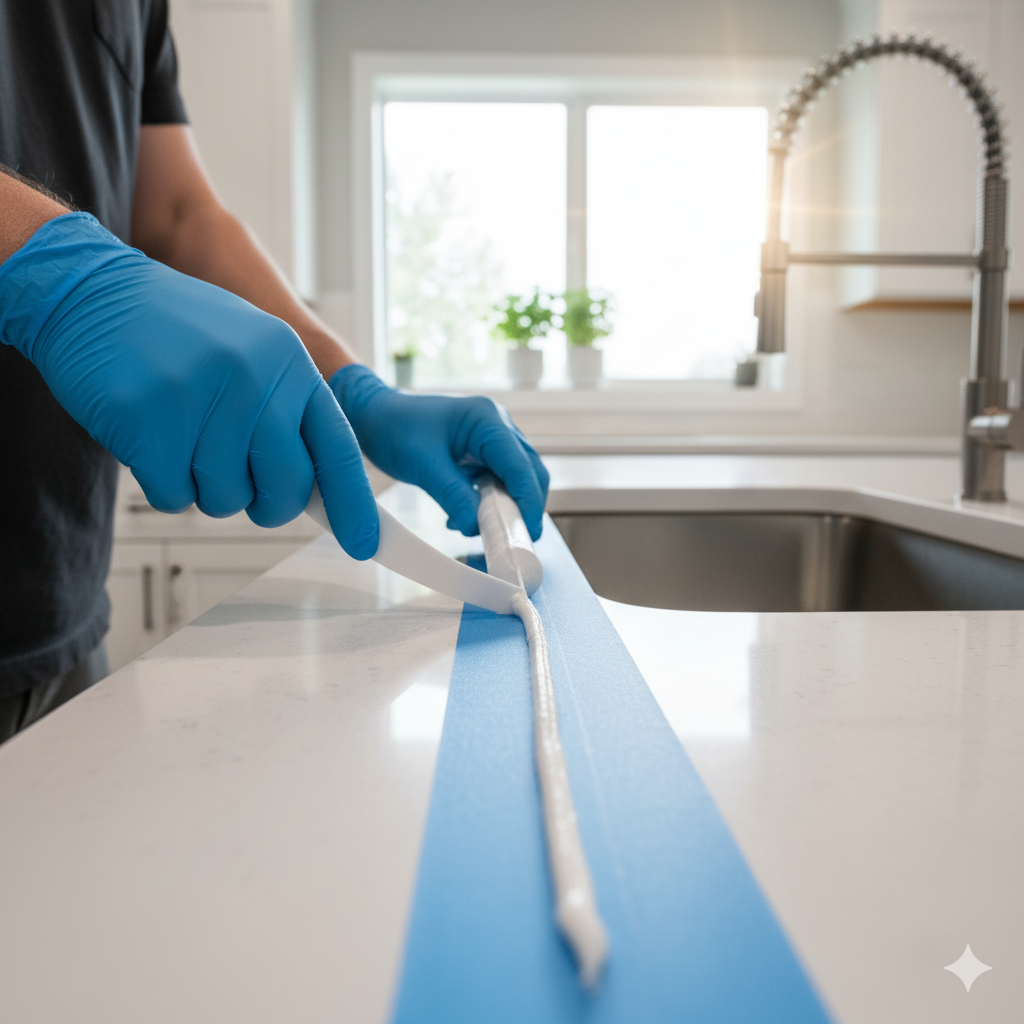
Position the gun at a constant angle and apply smooth pressure while moving along the seam. The secret to doing caulking for a kitchen countertop excellently is to keep an unbroken, continuous bead of caulk without gaps.
4. Smooth the Bead
Immediately after applying, use a caulk-smoothing tool or your wet finger to create a neat, concave finish. This not only improves the appearance but also ensures the caulk adheres well to both surfaces.
5. Let It Cure
Moisture should not be present on the caulk until it has completely dried—normally 24 hours, but it can take longer depending on the manufacturer’s recommendation. The specified curing period is usually indicated by the manufacturer.
The professionals at Caulking Service New Jersey make sure that everything is done with the utmost attention to detail, thus guaranteeing perfect sealing and a good-looking finish.
Common Mistakes to Avoid While Caulking
Contemplating the kitchen countertop caulking as an easy job, it is still a little tricky, though; DIY attempts very often fail due to some common mistakes. Caulking on a surface that is wet or dirty will result in a bond that is not strong enough. Picking the incorrect caulk may lead to the treatment of cracking or peeling off after some time. Mistaking is applying a lot of caulk, which is not only untidy but also collects dust. Of course, rushing through the curing process can also compromise the integrity of the seal. Hiring professionals from Caulking Service New Jersey means that not only will every corner be sealed perfectly, but also that the seal will be clean and last longer.
Maintaining Your Caulked Countertops
The maintenance of the kitchen countertop after caulking is very important for the sealing’s life. It is recommended to clean the caulked joints with mild soap and water regularly while avoiding the use of harsh chemicals, as they will break down the seal. Inspect the caulk once a year, looking for cracks, mold, or separation, which are the early signs of damage. The best solution in this case is to reapply caulk immediately so that no further problems occur.
The professional maintenance offered by Caulking Service New Jersey will not only guarantee the longevity of your seal but will also keep your kitchen looking immaculate throughout the year
Benefits of Professional Caulking Services
Choosing to do your own caulking is an option, but going for the professional services is way better. As it guarantee precision, quality material, and a long-lasting seal. Professionals will be using the right tools, will have the experience and knowledge to determine which caulk is best for your surface.
Caulking Service New Jersey has a team of professionals who deliver dependably, neatly, and quickly through caulking solutions that save your house from water damage and mold while at the same time beautifying your kitchen. (Wikipedia)
FAQs
1. How often should I recaulk my kitchen countertop?
Most caulk joints can last from 5 to 10 years, depending on the product quality and environmental factors. You should reapply if you see cracks, gaps, or if the color is not uniform.
2. Can I use bathroom caulk for my kitchen countertop?
Yes, as long as it’s marked as “kitchen and bath” silicone or latex caulk. This type of caulk is designed to resist moisture, mold, and mildew
3. How long should I wait before using the sink after caulking?
It is best to wait at least 24 hours for the caulk to cure completely, ensuring a solid, waterproof seal that is less likely to peel or break.
4. Should I remove old caulk before applying new one?
Yes. Old caulk can interfere with the new caulk’s ability to adhere properly. Always remove the old caulk before reapplying, and always apply a new caulk over the old caulk.
5. Why should I hire professionals for caulking the kitchen countertop?
A professional like Caulking Service New Jersey will ensure exact application, premium products, and a clean, long-lasting finish that you’ll be happy with for years.
Final Thoughts
It is important to properly caulk your kitchen countertop. It is not only helps seal the gaps but also protects your investment, sanitation, and aesthetic appeal. Whether you are enhancing the look of your home or re-caulking an old caulk job, a clean and professional finish makes all the difference.
For a reliable expert to handle all your kitchen caulking needs, trust Caulking Service New Jersey with your project.