
When your bathroom, kitchen, or window edges start showing signs of wear, mold, or cracking, it’s time to learn how to remove old caulk properly. Over time, caulk becomes brittle and loses its seal, allowing moisture to seep in — leading to mildew, rot, and expensive repairs. The process may seem messy, but with the right techniques, tools, and patience, you can make your surfaces look new again.
In this detailed guide, Caulking Service New Jersey shares expert steps and pro tips to ensure your caulk removal is clean, smooth, and ready for a fresh application.
Why Removing Old Caulk is Important
Old caulk can harbor mold, mildew, and bacteria, especially in moisture-prone areas like showers and sinks. When caulk loses adhesion, it no longer protects against leaks. Simply applying new caulk over old material won’t solve the problem — it will prevent the new sealant from bonding properly, causing premature peeling. Proper removal not only ensures a watertight seal but also enhances the appearance and longevity of your surfaces.
Professionals at Caulking Service New Jersey always emphasize starting fresh — clean surfaces equal long-lasting results.
Tools and Materials You’ll Need
Before diving into how to remove old caulk, prepare the right tools. Having the proper equipment ensures a smoother process and minimizes damage to surrounding areas.
Essential Tools:
- Utility knife or caulk removal tool
- Plastic scraper
- Needle-nose pliers (for stubborn bits)
- Soft cloths or rags
- Isopropyl alcohol or caulk remover gel
- Rubber gloves and safety glasses
At Caulking Service New Jersey, we use professional-grade removers and precision tools to protect delicate tiles and surfaces during removal.
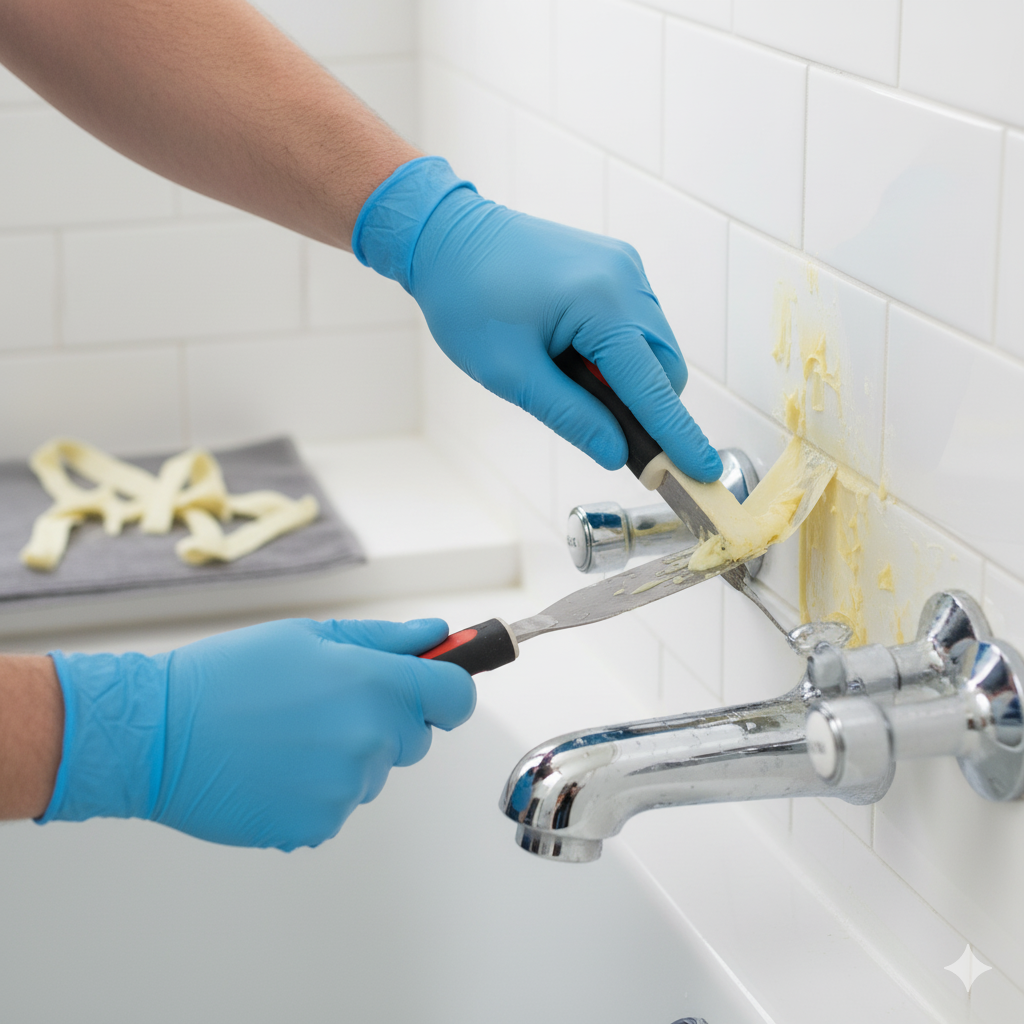
Step-by-Step Process: How to Remove Old Caulk Like a Pro
Step 1: Soften the Old Caulk
Apply a commercial caulk remover or a mix of warm water and mild detergent to soften the old material. Let it sit for at least 15–20 minutes. This step helps loosen the bond, making removal easier without scratching your tiles or fixtures.
Step 2: Cut and Lift the Caulk
Using a utility knife or caulk removal tool, carefully slice along the edges of the old caulk line. Gently lift and peel it away with pliers. Avoid digging too deep to prevent damage to surfaces.
Step 3: Scrape Away Residue
After the main strip is removed, use a scraper to eliminate leftover bits and buildup. If residue remains, reapply the remover and let it sit longer before scraping again.
Step 4: Clean and Prepare the Surface
Wipe the area with isopropyl alcohol to remove any oils, dust, or debris. Ensure the surface is completely dry before applying new caulk.
Professionals from Caulking Service New Jersey stress that a clean surface is the key to achieving a perfect, durable seal.
Common Mistakes to Avoid
- Skipping the softening step: This can cause scratches and uneven removal.
- Applying new caulk over old: It weakens adhesion and leads to leaks.
- Rushing the drying process: Moisture can prevent the new caulk from bonding properly.
Avoid these pitfalls to get professional-quality results every time.
Pro Tips from Caulking Service New Jersey
- Always use silicone caulk in wet areas like bathrooms.
- For best adhesion, let surfaces dry overnight before reapplying caulk.
- Use painter’s tape to create straight, clean lines for a professional finish.
- Replace your caulking at least every 2–3 years to maintain waterproofing.
If the project feels overwhelming, calling in experts from Caulking Service New Jersey ensures precision, efficiency, and long-lasting results. (kleanstrip)

FAQs About How to Remove Old Caulk
Can I apply new caulk over old caulk?
No, new caulk won’t adhere properly to old material. Always remove the old caulk first for a clean bond and watertight seal.
What’s the easiest way to remove an old caulk?
Using a commercial caulk remover and a utility knife makes the process faster and cleaner. Let the remover soften the caulk before scraping.
How do I remove caulk without damaging tiles?
Use plastic tools instead of metal ones, apply remover gently, and avoid deep scraping. This minimizes tile or surface damage.
How long should I wait before applying new caulk?
Wait until the area is completely dry — ideally 12 to 24 hours. This ensures proper adhesion and longevity of the new caulk.
5. When should I hire professionals like Caulking Service New Jersey?
If your caulking involves high surfaces, large areas, or delicate materials, professional help guarantees efficiency, safety, and a flawless finish.
Final Thoughts
Learning how to remove old caulk correctly can make all the difference in maintaining your home’s cleanliness, durability, and waterproofing. Whether it’s your shower, sink, or windows, proper removal ensures that your new caulking job lasts for years.If you prefer expert help, Caulking Service New Jersey provides professional caulk removal and reapplication services across New Jersey — ensuring precision, protection, and perfection for your property.