
Perfect Kitchen Sink Caulk Guide for a Spotless Home
When it comes to maintaining your kitchen, one of the most overlooked yet crucial details is the kitchen sink caulk. A good quality caulk will not only maintain a fresh and clean look in your sink area but also eliminate the risks of water damage, mold, and mildew. The sink and countertop area may eventually become a place of leaks if it remains unsealed. Applying the right caulk and its upkeep will be the secret to a clean and sanitary kitchen for a long time. We will provide in this guide all that you need to know about kitchen sink caulk, from the best kind to the master-like application.
Caulking Service New Jersey has witnessed how a mere re-caulking task can change the look of a kitchen and, at the same time, save it from damage that is going to cost a lot. Let us now get into the specifics so that you will be able to do it correctly the very first time.
Why Kitchen Sink Caulk Matters
The space between your kitchen sink and countertop may be small, but it fulfills an important function of not allowing water to get underneath. When caulking is not effective, water can leak behind, causing mold, wood decay, and possibly damaging the countertop. The right caulk for your kitchen sink is designed to keep the watertight seal so your sink is clean and sanitary.
Caulk also improves the look of your sink area. A crisp and clean line of caulk contributes to a kept, polished professional look in your kitchen. When caulk is cracked or aged, your sink will make it look dirty even if it is clean. Caulking Service New Jersey recommends replacing caulk every couple of years to tighten everything up and keep it clean and watertight.
Types of Kitchen Sink Caulk
Choosing the right type of caulk can make all the difference. Here are the most common types used around kitchen sinks:
1. Silicone Caulk
Silicone caulk has been the number one choice for kitchen sinks. It is completely waterproof, very elastic, and has a high resistance to mold and mildew. In comparison to acrylic caulk, silicone is less prone to shrinkage or cracking. On the other hand, it might be somewhat difficult to work with because it tends to be sticky and therefore needs to be handled very carefully.
2. Acrylic Latex Caulk
Silicone caulk has been the number one choice for kitchen sinks. It is completely waterproof, very elastic, and has a high resistance to mold and mildew. In comparison to acrylic caulk, silicone is less prone to shrinkage or cracking. On the other hand, it might be somewhat difficult to work with because it tends to be sticky and therefore needs to be handled very carefully.
3. Hybrid Caulk
Hybrid caulks are the best of both kinds combined — the convenience of acrylic and the flexibility of silicone. They are strong, mildew-resistant, and easy to work with, which makes them a perfect choice for DIYers who want the smooth and neat output of the result without much trouble.
At Caulking Service New Jersey, we frequently suggest using silicone or hybrid caulk for the best-performing and long-lasting protection against moisture in the kitchen.
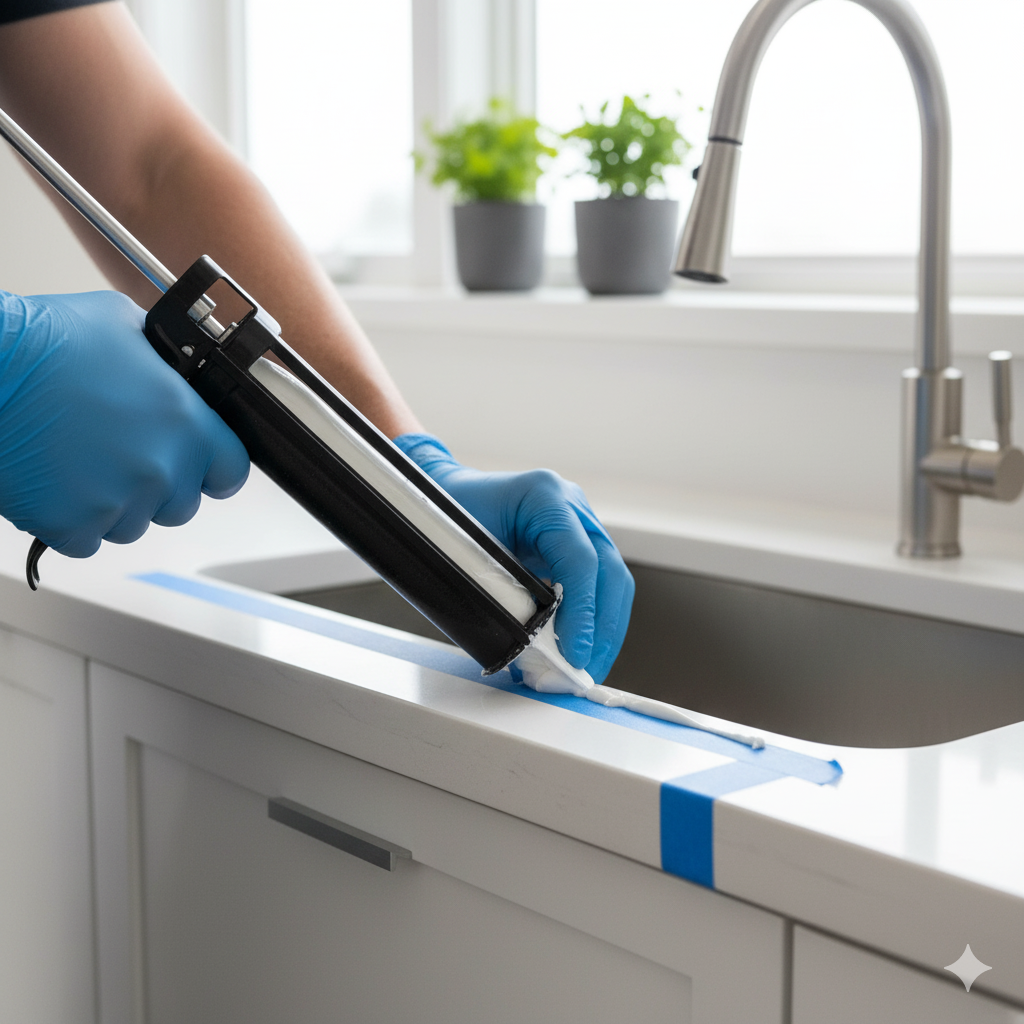
How to Apply Kitchen Sink Caulk Like a Professional
Applying kitchen sink caulk, while not hard, does require patience and meticulous work. Here is a step-by-step guide to creating a clean and long-lasting seal.
Step 1: Remove Old Caulk
Take a caulk remover instrument or a razor blade and scrape off the old caulk. It’s crucial to eliminate all remains since the new caulk might not stick well if there are still little pieces left.
Step 2: Clean the Surface
Clean the surface area with rubbing alcohol or a light cleaner. Before applying the new caulk, the surface has to be entirely dry, as moisture can weaken the bond.
Step 3: Prepare the Caulk Tube
Cut the caulk tube nozzle at a 45-degree angle for a smooth, even bead. Load it into a caulk gun.
Step 4: Apply the Caulk
A consistent and steady line of kitchen sink caulk is to be applied along the junction of the sink and countertop. Go slowly to make sure that the coverage is uniform.
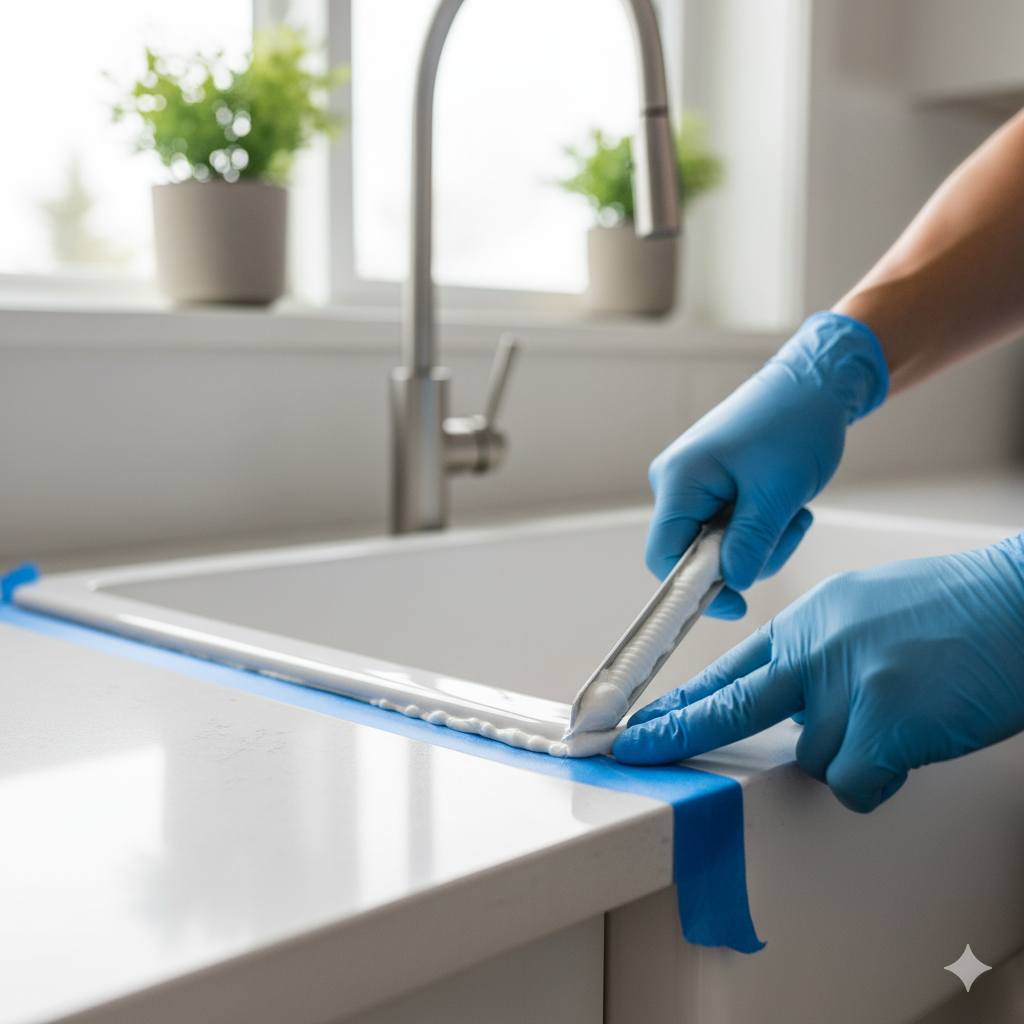
Step 5: Smooth the Bead
Use your finger or a caulking tool dipped in water to smooth out the caulk line. This creates a professional finish and ensures full contact with both surfaces.
Step 6: Let It Cure
The drying of the caulk is to be done completely per the manufacturer’s directions, usually with in 24 hours. Do not use the sink at this time.
We at Caulking Service New Jersey believe in the importance of proper preparation and accuracy. Hurrying through the process may cause uneven caulk lines or weak seals that will break soon.
Maintenance Tips for Long-Lasting Caulk
The best caulk needs prompt maintenance from time to time. It is advisable to check the caulk every now and then for any cracks, gaps, and discoloration. If you see any signs of mold growth or the caulk becoming loose, then it is absolutely necessary to use fresh caulk. Always try to keep the area around the sink dry, and also wipe off the water left over after you have used the sink in order to extend the life of your seal.
There will be no more disappointment if you do professional re-caulking every few years. The professional staff at Caulking Service New Jersey will guarantee that your sink is sealed with the top-quality, mold-resistant materials with the longest life span.
Common Mistakes to Avoid When Caulking
Many DIYers make simple mistakes that lead to poor results. Avoid these common errors:
- Applying caulk on wet or dirty surfaces
- Using the wrong type of caulk for kitchen environments
- Over-applying or under-applying the sealant
- Not smoothing the bead properly
- Using the sink before the caulk cures
Avoiding these traps will allow you to have a kitchen sink caulk that is effective and neat for many years to come.
FAQs About Kitchen Sink Caulk
1. How often should I reapply kitchen sink caulk?
Generally, experts suggest resuming every 2 to 3 years, depending on the conditions mentioned, the quality of the caulk, and how much it has been used.
2. Can I apply new caulk over old caulk?
No. The old caulk must be completely removed before applying the new one. If old caulk is left on, new caulk might not get attached properly, and so, there might be a water leakage.
3. What is the best caulk color for kitchen sinks?
The most popular colors are white and clear. Clear is ideal for stainless steel sinks, while white goes well with porcelain or composite materials.
4. How long does kitchen sink caulk take to dry?
Drying periods differ according to the manufacturer, but generally, most silicone caulks take about 24 hours to be completely cured. The sink should not be used until that time.
5. Should I hire a professional to caulk my kitchen sink?
If you seek a perfect and long-lasting result, then yes. The professionals of Caulking Service New Jersey use premium materials and advanced techniques that guarantee strong and durable waterproof seals.
Final Thoughts
A well-applied caulk does more than reduce leaks. It enhances the cleanliness and character of your entire kitchen. Selecting the right caulk for your project, caulking it properly, and maintaining it well will help extend the life of your sink and countertop. Whether you plan on doing it yourself or hiring a professional, you should remember that the secret to having it turn out perfectly is in the details.
If you are looking for caulking services that can deliver reliable sealing and a polished look that will last, contact Caulking Service New Jersey, the region’s trusted local kitchen and bathroom sealing experts.